
'The good news is that till the time there is growth in gross domestic product, Indian markets will continue to rise.'

'Investors need to expect steady returns over the next one to two years with bouts of high volatility.'

Wait for a few days before deciding to buy shares or MF schemes.

The Reserve Bank of India (RBI) has identified "climate shocks" as a risk to food inflation rates and overall price rise while stating that the outlook for the country's economic growth remains bright. In its Annual Report for 2023-24, released on Thursday, the central bank said easing supply-chain pressures, broad-based softening in core inflation, and early indications of an above-normal southwest monsoon meant well for the inflation outlook in 2024-25. "The increasing incidence of climate shocks, however, imparts considerable uncertainty to the food inflation and overall inflation outlook," said the RBI while noting headline inflation moderated by 1.3 percentage points on an annual average basis to 5.4 per cent in 2023-24.

'We expect the bull-market phase to still persist, but now led by large-caps which offer better valuation and benefit from FII inflows.'
'We expect continued pressure on midcaps, but any sharp correction looks unlikely from here on.'

Analysts caution against volatility and recommend buying stocks of companies that are on strong fundamental footing that have been beaten down badly in the recent carnage.

The Indian economy is projected to grow at 6.3 per cent in current financial year aided by investment and domestic demand. According to a World Bank report released on Tuesday, India continues to show resilience against the backdrop of a challenging global environment. In India, which accounts for the bulk of South Asia region, growth is expected to remain robust at 6.3 per cent in 2023-24, India Development Update of the World Bank said.

The recent India Art Fair in New Delhi generated greater interest than before in local contemporary artists among a growing cohort of Indian collectors, including millennials. But growth in Indian art is not restricted to that alone. This year saw 91 exhibitors, a much higher number than 63 in the previous edition - indicating a flourishing market. While live auction sales were largely suspended during Q2 of 2020 due to Covid-19 precautions, global fine art auctioneer Christie's says online-only sales were up 262 per cent in 2020 to $311 million), marking a record total for the channel.

The trade-war between the US and China is prompting investors to flee from risky assets, such as equities, to safe-haven bets, such as gold and treasuries

'While foreign institutional investor flows are still negative, they will turn positive in the latter part of 2023 as India's resilient growth becomes perceptible.'

'Given the inherent volatility, investors should take at least a three to five-year view.'

Indian equity, forex, money and commodity markets will remain closed today on account of Mahashivratri.

Sun Pharma was the best gainer among Sensex components, surging 6.91 per cent

The headline for corporate profit growth has been very encouraging in the July-September quarter (Q2) of 2023-24 (FY24), with the combined net profit of listed companies up by 38 per cent year-on-year. However, the earnings distribution has been very lopsided, with most of the growth coming from public-sector oil-marketing companies (OMCs), banks, non-bank lenders, automobile (auto) companies, and cement producers. By comparison, companies from information technology services, fast-moving consumer goods (FMCG), retail, and consumer durables were disappointed, experiencing a sharp slowdown in net sales growth and a relatively muted increase in reported net profit.
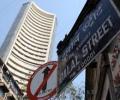
S&P upgraded India's credit outlook to 'stable' from 'negative' earlier.

'Continue with your SIPs to get the benefit of lower average prices in this challenging market environment.'

India's gold demand rose 8 per cent annually to 136.6 tonne in the March quarter helped by a strong economic environment despite prices touching historic highs, according to the World Gold Council. The aggressive gold buying by the Reserve Bank of India (RBI) also contributed to the rise in demand. India's gold demand in value terms rose 20 per cent on an annual basis to Rs 75,470 crore during the January-March period of this year on volume growth as well as a rise in quarterly average prices by 11 per cent.

'As China's reopening euphoria fizzled out on the back of some disappointing economic data, we saw inflows coming back to India with full force in the past 3-4 months.'

Among the Sensex firms, UltraTech Cement, Reliance Industries, ICICI Bank, HDFC Bank, Bharti Airtel, IndusInd Bank, State Bank of India, Tata Consultancy Services, Larsen & Toubro, Kotak Mahindra Bank and State Bank of India were the major gainers. In contrast, Tata Motors, Maruti, Axis Bank, Mahindra & Mahindra, ITC, NTPC, Tata Steel and Bajaj Finserv were the major laggards.

Bharti Airtel , RCom and Tata Communications ended down between 0.1-1%.

Rupee rebounds from one-week low, up 9 paise against dollar.

The rupee had retreated from three-week high and ended six paise down at 60.67 against the dollar on demand from importers for the US currency in Thursday's trade.

The V-shaped rebound has been aided by a gush of liquidity flooding the global financial system, thanks to balance sheet expansion.

India is likely to grow by 7.5 per cent in the first quarter of the current financial year, driven by rising aggregate demand and non-food spending in the rural economy, according to an article in the RBI's May Bulletin released on Tuesday. The Indian economy has demonstrated marked resilience in the face of geopolitical headwinds impacting the supply chain, said an article on the state of the economy published in the May Bulletin.
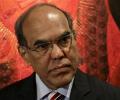
Subbarao said, short-term as well as medium-term prospects or Indian economy continue to be grim. Fiscal deficit is going to be much higher, the debt burden much larger and the financial sector will be in a worse shape.

The challenge isn't in selling -- it's easy to sell when the market peaks. The real challenge is in buying back.

The markets had been on an upward trajectory since August 2013.

German premium car maker Mercedes-Benz on Wednesday reported nearly 100 per cent growth in sales at 4,101 units in the domestic market in September of the current year. Mercedes-Benz India had sold 2,058 cars in the Indian market in the July-September period of 2020. The strong rebound in sales particularly in Q3 2021 retail, reflects the continuous V-shaped recovery witnessed since the pandemic affected second quarter (April-June), owing to the return of economic activities, a stable economy at large and an overall positive market outlook.

The broadening of the market rally sends the signal that growth will be broad-based, observes Akash Prakash.

In the short term the markets look to remain volatile. They could consolidate beyond the April results season, says market expert Pranav Sanghavi.

TCS, Infosys and Wipro were down 0.4-2% each. Capital goods majors also ended lower with L&T and BHEL down 1.4-3.9% each.

On the Sensex chart, Tata Steel, HDFC Bank, Ultratech Cement, PowerGrid, ONGC, Kotak Bank and Axis Bank were among prominent gainers. Nifty settled 82.10 points or 0.70 per cent up at 11,762.45.

The 30-share BSE benchmark jumped 533.74 points or 0.91 per cent to 59,299.32. During the day, it zoomed 783.24 points to 59,548.82.

For a while, it seemed the markets were going on a free fall.

The hospitality industry has seen plenty of interest since the catastrophic impact of the pandemic, which led to losses in FY21. The hotel industry market cap has more than tripled since 2019 on the combination of a strong earnings rebound and positive surprises, as well as three recent listings. The industry has good tailwinds. The anticipation is, demand for rooms will outrun supply for a few years despite capacity expansions.

SBI was the top loser in the Sensex pack, shedding around 3 per cent, followed by Bajaj Finserv, Tech Mahindra, Sun Pharma, Bajaj Finance and Axis Bank. Nifty fell 143.60 points to 17,873.60.

Year 2017 will be a benign year for FII flows into India feels Akash Singhania, deputy chief investment officer, DHFL Pramerica Asset Managers.

UBS, Credit Suisse see emerging markets doing well next year, but expect India to underperform, given its rich valuations.

International Monetary Fund (IMF) chief economist Gita Gopinath has made a strong case for regulating cryptocurrencies, saying it will always be a challenge to ban them as they operate from offshore exchanges. Gopinath also suggested a global policy and co-ordinated action for regulating cryptocurrencies. "I think cryptocurrencies are a particular challenge for emerging markets. "It seems to be more attractive to adopt cryptocurrencies and assets in emerging economies than in advanced economies," she said while addressing an event organised by the National Council of Applied Economic Research (NCAER) on Wednesday.

Spending has begun rising in infrastructure, construction and Indian firms have started to benefit.
